HomePracticeJazz BluesG Major

Jazz blues · G major

Jazz blues in G

This is the 12-bar jazz blues form with the ♯iv°7, VI7 and ii–V turnaround that jazz players add to the plain blues — in G, the chords are G7 – C7 – C♯°7 – E7 – Am7 – D7. In G the blues is G7, C7 and D7 at heart; jazz players add C♯°7 in bar 6 (bass C♯ climbing back to G), E7 in bar 8 to set up the Am7 – D7 cadence, and a G7 E7 | Am7 D7 turnaround in the last two bars.

The form

Jazz Blues in G — bar by bar.

12-bar chorus

1G7I⁷
2C7IV⁷
3G7I⁷
4G7I⁷
5C7IV⁷
6C♯°7♯iv°⁷
7G7I⁷
8E7VI⁷
9Am7ii⁷
10D7V⁷
11G7 · E7I⁷ VI⁷
12Am7 · D7ii⁷ V⁷

Generic form in Roman numerals — the harmonic skeleton, not any particular tune. Two chords in a bar are two beats each.

Interactive trainer

Hear it, see it, play it — in G major.

Loop
Lead
Tempo110 bpm
I⁷
I7
G7
ArpeggioG · B · D · F
Chord-scaleMixolydian  G A B C D E F
IV⁷
IV7
C7
ArpeggioC · E · G · B♭
Chord-scaleMixolydian  C D E F G A B♭
♯iv°⁷
♯iv°
C♯°7
ArpeggioC♯ · E · G · B♭
Chord-scaleDiminished (whole–half)  C♯ D♯ E F♯ G A A♯ C
VI⁷
VI7
E7
ArpeggioE · G♯ · B · D
Chord-scaleMixolydian  E F♯ G♯ A B C♯ D
ii⁷
ii
Am7
ArpeggioA · C · E · G
Chord-scaleDorian  A B C D E F♯ G
V⁷
V
D7
ArpeggioD · F♯ · A · C
Chord-scaleMixolydian  D E F♯ G A B C

Chord-scale on your instrument

Showing: G7 — Mixolydian

Piano · G7 with Mixolydian

CDEFGABCDEFGAB

Guitar · standard tuning

eBGDAE123456789101112EFGABCDEBCDEFGABGABCDEFGDEFGABCDABCDEFGAEFGABCDE

Piano · C7 with Mixolydian

B♭B♭CDEFGACDEFGA

Guitar · standard tuning

eBGDAE123456789101112EFGAB♭CDECDEFGAB♭GAB♭CDEFGDEFGAB♭CDAB♭CDEFGAEFGAB♭CDE

Piano · C♯°7 with Diminished (whole–half)

C♯D♯F♯B♭C♯D♯F♯B♭CEGACEGA

Guitar · standard tuning

eBGDAE123456789101112EF♯GAB♭CC♯D♯ECC♯D♯EF♯GAB♭GAB♭CC♯D♯EF♯GD♯EF♯GAB♭CC♯AB♭CC♯D♯EF♯GAEF♯GAB♭CC♯D♯E

Piano · E7 with Mixolydian

C♯F♯G♯C♯F♯G♯DEABDEAB

Guitar · standard tuning

eBGDAE123456789101112EF♯G♯ABC♯DEBC♯DEF♯G♯ABG♯ABC♯DEF♯DEF♯G♯ABC♯DABC♯DEF♯G♯AEF♯G♯ABC♯DE

Piano · Am7 with Dorian

F♯F♯CDEGABCDEGAB

Guitar · standard tuning

eBGDAE123456789101112EF♯GABCDEBCDEF♯GABGABCDEF♯GDEF♯GABCDABCDEF♯GAEF♯GABCDE

Piano · D7 with Mixolydian

F♯F♯CDEGABCDEGAB

Guitar · standard tuning

eBGDAE123456789101112EF♯GABCDEBCDEF♯GABGABCDEF♯GDEF♯GABCDABCDEF♯GAEF♯GABCDE
RootChord toneScale toneBeing played
Play this chord:

Click any chord card to see its scale, and tap any key or fret to hear that note. Turn on “+ Arpeggios” or “+ Scales” and the guitar or piano plays the line live over the vamp, lighting each note on the diagram as it sounds. All audio is synthesized in your browser — nothing is recorded or copyrighted.

Reference

G major Jazz blues — chords, arpeggios & chord-scales.

FunctionChordChord tones (1–3–5–7)Chord-scaleScale notes
I⁷G7G – B – D – FMixolydianG A B C D E F
IV⁷C7C – E – G – B♭MixolydianC D E F G A B♭
♯iv°⁷C♯°7C♯ – E – G – B♭Diminished (whole–half)C♯ D♯ E F♯ G A A♯ C
VI⁷E7E – G♯ – B – DMixolydianE F♯ G♯ A B C♯ D
ii⁷Am7A – C – E – GDorianA B C D E F♯ G
V⁷D7D – F♯ – A – CMixolydianD E F♯ G A B C
Guide tonesG7C7C♯°7E7Am7D7
3rdBEEG♯CF♯
7thFB♭B♭DGC

How to practise this

Build the G major cadence into your ear.

1. Arpeggios in time. Loop the vamp at 70–90 bpm and play G7, C7, C♯°7, E7, Am7, D7 as 1–3–5–7 quarter notes, one chord per bar. Use the “+ Arpeggios” loop above to hear it played and copy the line.

2. Guide tones. Play only the 3rd and 7th of each chord: B–F → E–B♭ → E–B♭ → G♯–D → C–G → F♯–C. Notice that C, the 7th of D7, falls a half-step to B, the 3rd of G7 — that is the resolution.

3. Chord-scales. Run Mixolydian on G7, Mixolydian on C7, Diminished (whole–half) on C♯°7, Mixolydian on E7, Dorian on Am7, Mixolydian on D7, then improvise keeping chord tones on beats 1 and 3.

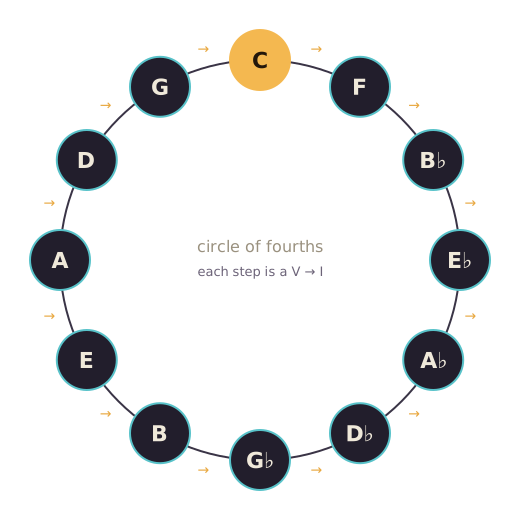
4. Move it. When G is clean, go to C major — a fourth up — and keep going around the circle.
Common questions

G major Jazz blues FAQ.

What are the chords of the Jazz blues in G major?

G7 – C7 – C♯°7 – E7 – Am7 – D7. The I7 chord is G7 (G, B, D, F); The IV7 chord is C7 (C, E, G, B♭); The ♯iv° chord is C♯°7 (C♯, E, G, B♭); The VI7 chord is E7 (E, G♯, B, D); The ii chord is Am7 (A, C, E, G); The V chord is D7 (D, F♯, A, C).

Which scales do I play over G7 – C7 – C♯°7 – E7 – Am7 – D7?

G7: Mixolydian (G A B C D E F). C7: Mixolydian (C D E F G A B♭). C♯°7: Diminished (whole–half) (C♯ D♯ E F♯ G A A♯ C). E7: Mixolydian (E F♯ G♯ A B C♯ D). Am7: Dorian (A B C D E F♯ G). D7: Mixolydian (D E F♯ G A B C).

What is the guide-tone line for the Jazz blues in G major?

The thirds and sevenths: B and F over G7, E and B♭ over C7, E and B♭ over C♯°7, G♯ and D over E7, C and G over Am7, F♯ and C over D7. Each voice moves by a half-step or stays put — that is what makes the progression sound like it resolves.

How should I practise this progression?

Loop the vamp at a slow tempo, play each arpeggio 1–3–5–7 in time, then play each chord-scale up and down, then improvise using only chord tones on the strong beats. When it is clean, move to the next key around the circle of fourths.

All twelve keys

The major Jazz blues in every other key.

Related in G: ii–V–I · turnaround · rhythm changes. Read the theory in Chord-scale theory, or see the scales on their own pages: G Mixolydian, C Mixolydian, C♯ Dim. W–H, E Mixolydian, A Dorian, D Mixolydian.