Build the sound
Play G – B – D – E individually, then choose a shell voicing above. Sing the highest note before playing the chord.
Voicings · G6 · Guitar
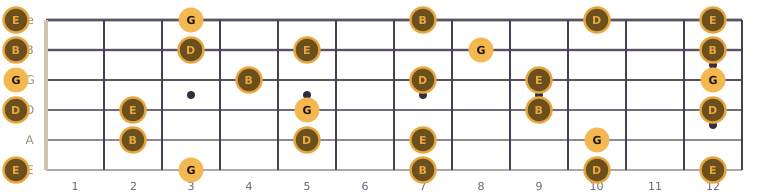
G6 is spelled G – B – D – E (1 3 5 6) — a tonic alternative to maj7, especially on the last chord of a tune. Here are 5 ways to voice it on guitar: drop 2, drop 3, shell, rootless a, rootless b. Every diagram is playable — press play to hear the chord, or “roll it” to hear the voices one by one, low to high.
The voicings
Take the close voicing and drop its second-highest voice an octave. The most-used four-note voicing on guitar and in piano left hands. Strings A-D-G, frets 5-5-4 (position 1).
Drop the third-highest voice of the close voicing an octave: a wide, open sound. Strings A-D-B, frets 2-5-3 (position 1).
Root, seventh and third only. The fifth is dropped — it adds nothing to the chord's identity — leaving a light, clear voicing. Strings E-A, frets 3-2.
Bill Evans-style left-hand voicing: the third on the bottom, the ninth on top, the bass player supplies the root. Strings G-B-e, frets 4-3-5 (position 1).
The companion rootless voicing with the seventh on the bottom. Alternate A and B so the top voice moves by step through a ii–V–I. Strings E-G-B, frets 5-4-3 (position 1).
Your next 10 minutes
Play G – B – D – E individually, then choose a shell voicing above. Sing the highest note before playing the chord.
Compare the displayed voicings of G6. Notice which note is highest in each. Repeat the two shapes with the smallest comfortable hand movement, leaving a beat of silence between them.
Play G6 on beats 2 and 4 at 60 bpm for four bars, then on the “and” of beat 2 for four bars. Keep the same notes while changing the rhythm. Mute unused strings and test each fretted note for buzz.
Listen for this: The chord tones are G, B, D, E. a tonic alternative to maj7, especially on the last chord of a tune. A fuller voicing is not automatically better: leave room for the melody and bass.
Understand the sound
The sixth replaces the major seventh. Compare the softer root-and-sixth relationship with the half-step tension of a major seventh.
Here the third is B, and degree 6 is E. Play G in the bass and compare these voices individually before combining them.
Start with the smallest displayed shape you can play cleanly. Move its highest note into a comfortable register and listen for a clear melody above the chord.
Sound the strings separately before playing them together. If a note is muted, adjust the finger angle instead of squeezing harder.
Start with G on string 6, fret 3. The next note B is on string 6, fret 7. Name both notes aloud before playing, then find the same two pitches in another octave.
Before moving on, close the diagram and name the notes: G · B · D · E. Then play a two-bar phrase from memory and leave two bars of silence.
Behind the voicings
Reference
| Chord tone | Note | Interval |
|---|---|---|
| 1 | G | unison |
| 3 | B | major 3rd |
| 5 | D | perfect 5th |
| 6 | E | major 6th |
Arpeggio: G6 arpeggio on guitar. Scale: G Major (Ionian).
Take it to the bandstand.Practice Radio streams endless changes to comp G6 through all twelve keys, with the chord and scale shown live — plus ear-training and call & response modes.
▶ Open Practice RadioCommon questions
G, B, D, E — chord tones 1 3 5 6. Rootless voicings add the 9th, A, and leave the root to the bass.
The shell voicing (root, seventh, third) on strings E, A: three notes, one comfortable shape, and it still sounds unmistakably like G6.
Start from the close voicing G B D E and drop the second note from the top an octave: D – G – B. It spreads the chord so it fits the hand — and on guitar it fits four adjacent strings.
G6 is a tonic alternative to maj7, especially on the last chord of a tune. Its character is open, classic, swing-era.
Keep going
Same chord on piano · Major 6th hub.
Other chords from G